
A remote substation in the mountains experiences an unexpected voltage spike at 2:00 AM during a freezing rainstorm. A decade ago, this meant waking up two field technicians, sending them over slick roads in a work truck, and hoping they could safely aim a handheld thermal scanner at an insulator.
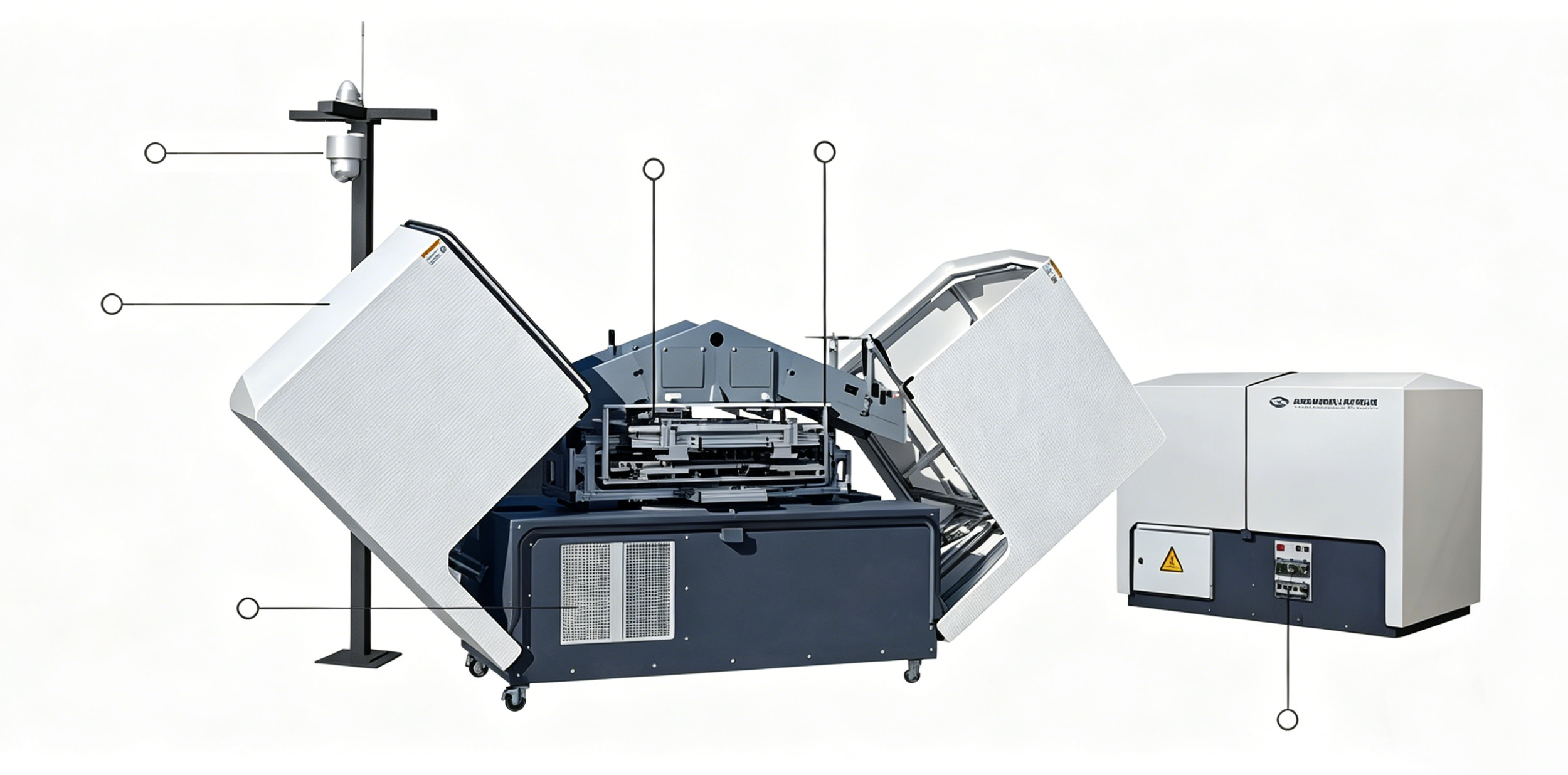
Today, a field-deployed Drone Dock opens its motorized canopy. An aircraft launches, navigates an automated flight corridor, maps the anomaly using radiometric infrared, lands within centimeters of target center, and locks down to begin replenishing its pack via an integrated automated drone charging station. The entire sequence finishes in under fifteen minutes without exposing personnel to hazardous road conditions or high-voltage zones.
Industrial asset monitoring is moving away from manual operations. Sending pilots to sites in trucks creates significant logistical friction, high labor costs, and long intervals between inspections. Moving to an autonomous UAV docking station turns aerial inspection from an occasional manual survey into an automated, continuous utility.
Why Asset Owners Are Retiring the "Pilot-in-a-Truck" Workflow
Manual drone operations run into clear operational bottlenecks:
High Overhead Costs: Every flight requires vehicle mileage, field pay, travel expenses, and safety risk overhead.
Low Inspection Frequency: Sites located hours from depot hubs are inspected once a quarter rather than daily or weekly. Asset deterioration often goes unnoticed between visits.
Human-Driven Data Variance: Manual piloting leads to inconsistent camera angles, varying altitudes, and uneven lighting conditions across seasonal inspections.
An autonomous UAV docking station keeps the sensor situated where the work happens. The aircraft runs identical, pre-programmed flight trajectories day or night, feeding reliable, standardized data directly into backend maintenance workflows.
Evaluating Core Hardware: What Matters Inside the Box?
A commercial dock must function reliably 365 days a year in exposed industrial settings. System failures often stem from mechanical complexity or insufficient environmental shielding rather than flight hardware issues.
Direct Contact Charging vs. Battery Swapping
Early Drone-in-a-Box system designs relied on multi-axis robotic arms to physically pull depleted packs and insert charged units. While this allows rapid turnaround times (under five minutes), the mechanical complexity introduces failure points: gears jam in dust, mechanical linkages freeze in ice storms, and complex alignment racks fail.
Modern industrial installations favor direct electrical contact charging. Spring-loaded contacts or pad-level conductors charge the aircraft in place as soon as mechanical clamps center the landing gear.
For standard monitoring operations, a 40-minute turnaround is well within target operational tempo, making direct contact charging the more reliable option.
Weatherproofing and Environmental Control
Field longevity requires rigorous protection against the elements:
Ingress Protection: Look for an overall cabinet rating of IP55 or higher, with sensitive internal controller and power bays sealed to IP67.
Internal Thermal Management: Lithium chemistries degrade if charged when internal temperatures drop below 0°C or climb past 45°C. The enclosure must use active HVAC or solid-state thermal regulation to warm the batteries in sub-zero winters and cool them after heavy summer flight cycles.
Dehumidification: Continuous active dehumidification prevents condensation buildup on internal optical sensors, lenses, and balance boards during rapid day-to-night temperature swings.
Wind Survival: The dock housing must stay anchored in high winds, and internal guide bars must lock the drone in place before the canopy seals shut.
Operating Beyond Visual Line of Sight (BVLOS)
Deploying an industrial drone dock for BVLOS operations means human operators are not in the field to step in during an anomaly. The system must handle connection drops and sudden airspace conflicts autonomously.
Fail-Safe Connectivity: Docks should support multi-carrier failover modems alongside local industrial Ethernet or directional Wi-Fi links. If public cellular connectivity drops during a run, the aircraft executes pre-programmed return-to-base maneuvers along a verified terrain clearance profile.
Airspace Integration: Modern docks incorporate ADS-B In receivers to listen for transponder signals from nearby manned aircraft. If a low-flying helicopter enters the flight corridor, mission software drops the drone's altitude or recalls it to the platform until the corridor is clear.
Software Execution: Building an Automated Inspection Workflow
A reliable dock requires mission management software that functions cleanly in the background:
Environmental Verification: Prior to launch, the dock's integrated weather station checks wind speed, precipitation, and barometric pressure. If numbers exceed flight thresholds, the mission postpones automatically.
Deterministic Route Execution: Using dual-antenna RTK guidance, the aircraft flies repeatable inspection angles down to the centimeter, ensuring long-term data consistency across seasonal audits.
Edge Inference and Data Transfer: High-end payloads process imagery locally. Rather than forcing technicians to parse thousands of raw images, onboard AI flags hotspots, leaks, or mechanical damage in real time, triggering notifications through enterprise webhook integrations (such as SAP or IBM Maximo).
Practical Deployment Scenarios
Water Resources & Dams: Stations placed near reservoir dams monitor water levels, structural concrete conditions, and runoff channels without requiring personnel to navigate hazardous mountain terrain.
Linear Corridors & Transportation: Docks spaced along rail systems and highway corridors monitor track subsidence, check rock-fall zones, and provide immediate visibility during traffic blockages.
Forestry & Conservation: Deployed stations run recurring thermal sweeps across timber reserves to detect smoldering campfires or early-stage lightning strikes beneath the canopy well before smoke plumes show above the tree line.
Perimeter Defense: Integrated with boundary sensors, a dock can launch a thermal-equipped drone within thirty seconds of a tripwire alert, keeping sight on perimeter intrusions before ground teams arrive.
Industrial Engineering: The BOXIANG UAV Approach
Choosing an industrial dock partner requires looking closely at manufacturing and engineering backgrounds.
CHANG CHUN CHANG GUANG BO XIANG UAV Co., Ltd. (BOXIANG UAV) develops unmanned aerial platforms and automated ground docking infrastructure for complex environments. Tracing its engineering lineage back to the UAV Division of the Chinese Academy of Sciences (CAS) in 2009, the organization was restructured as an innovation-focused enterprise in September 2021. Designated as a "Specialized, Refined, Distinctive, and Innovative Enterprise" in Jilin Province and serving as a provincial-level economic mobilization center, the team builds systems grounded in aerospace control and long-endurance engineering.
The BOXIANG UAV Drone Dock integrates an automated weatherproof shelter with proprietary multi-rotor and VTOL platforms, high-resolution modular payloads, and centralized cloud dispatching. Key design elements include:
Centimeter-Level Guidance: RTK-assisted descent supported by mechanical positioning guide bars for precise charging contact.
Robust Weather Resistance: Sealed mechanical construction designed to handle wind, driving rain, and winter conditions.
Unified Management Platform: Cloud infrastructure capable of coordinating multi-dock schedules, handling live video streaming, and managing payload data across dispersed regional assets.
For technical specifications, visit the official platform overview at bxuav.cc/drone-dock.
Site Selection Checklist
Before running electrical conduit or pouring concrete, verify these site fundamentals:
Frequently Asked Questions
How does a drone dock handle unexpected grid power loss while an aircraft is airborne?
Industrial installations include an internal uninterruptible power supply (UPS). If the grid drops during a flight, the dock uses battery reserve to keep network communications, weather stations, and precision homing sensors active. The software commands the aircraft to return to base immediately, clamps it down, and closes the canopy.
What is the realistic service life of fast-charged batteries in a docking station?
With active thermal conditioning—warming cold packs and cooling hot batteries before sending high current—modern enterprise flight packs typically yield between 400 and 700 duty cycles before capacity drops below 80%.
Can one central operator manage docks positioned across different regions?
Yes. Centralized cloud platforms decouple mission planning from geographic location. A flight operations coordinator at headquarters can oversee docks dispersed across several sites, setting scheduled runs and reviewing incoming data feeds from a single browser dashboard.
How does the system prevent landing misses during sudden wind gusts?
Modern setups combine dual-antenna RTK guidance on the drone with mechanical centering pushers on the dock surface. The RTK system brings the drone down onto the target area, and motorized guide bars physically seat the landing gear directly against the charging pins as the canopy closes.
What safety measures trigger a mid-flight mission abort?
If the dock's integrated weather station detects winds, rainfall, or temperature shifts exceeding operational thresholds, or if the aircraft detects an ADS-B conflict or critical telemetry drop, it aborts the current waypoint task and returns along a clear, pre-mapped corridor to dock safely.